
Increase the energy efficiency of your heating systems
If the flow rates of the individual radiators in the heating system are not correctly coordinated, this can lead to inequalities in the energy distribution and thus in the room temperature.
Hydraulic balancing ensures the even distribution of heating water in the heating system. The aim is to increase energy efficiency.
In technical terms, this means that the right amount of heated water is delivered to each radiator in the property at the right pressure to achieve optimal heat distribution.
The hydraulic balancing not only contributes to increasing living comfort, but above all promotes energy savings, as the heating system works more efficiently and less energy is wasted.
We will work with you to implement the requirements of the new Energy Saving Ordinance
The 'Ordinance on securing energy supply through medium-term effective measures', or EnSimiMaV for short, sets out certain requirements to improve the energy efficiency of buildings. Hydraulic balancing is an important part of these requirements in order to reduce the energy consumption of heating systems.
According to EnSimiMaV, homeowners and developers must ensure that the hydraulic balancing is implemented professionally for renovated or newly constructed heating systems.
In addition, hydraulic balancing is often an essential prerequisite for government funding and subsidies for energy-saving renovation measures.
What you need to consider when performing hydraulic balancing in existing buildings
The type of heat supply and heating systems vary from building to building. The following special features must be taken into account when implementing hydraulic balancing in existing buildings. We recommend a thorough analysis of the existing heating system at the beginning in order to carry out a well-founded assessment and planning for further modernization measures.
What is the condition of the insulation and heat requirements?
Different insulation conditions and heterogeneous heat requirements make the calculation of the heating load, including planning the hydraulic balancing in the existing building, more complex. This requires a thorough analysis of the building structure.
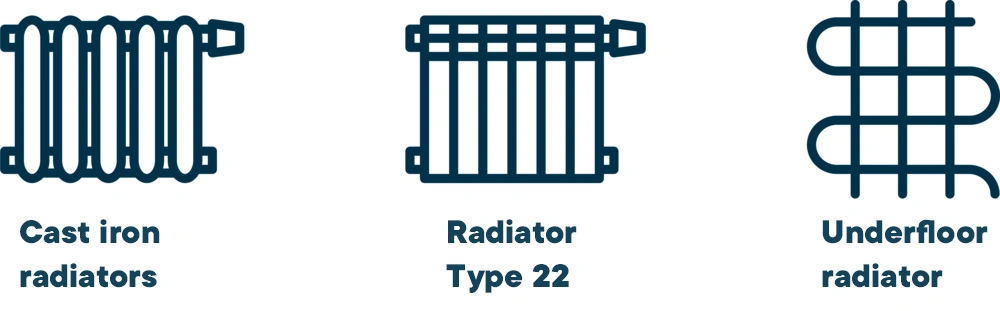
What types of radiators were installed?
Existing buildings often have a large number of radiators of different sizes, types and ages installed. This situation leads to increased complexity when carrying out hydraulic balancing because radiators may not be optimally coordinated with one another.
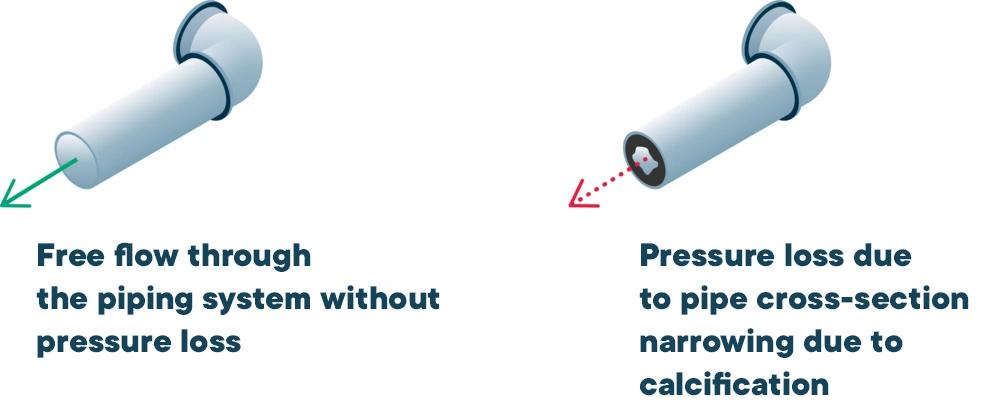
Is the piping system in the building intact?
Piping problems can occur, especially in older existing buildings. If, for example, pipes and valves show signs of wear or no longer meet current standards, this can make it difficult to carry out the hydraulic balancing.
Can hydraulic balancing be implemented directly in the existing system?
Many existing buildings have heating systems installed that may require additional structural measures, such as the installation of valves, in order to achieve the calculated hydraulic balance.
With these solutions we realize the hydraulic balancing in your existing building
Our thermal engineers offer you two approaches to implement the hydraulic balancing of your heating systems. The method depends on factors such as the type of heating system, the existing components and the construction situation. Here are some common methods:
Solution #01
Classic hydraulic balancing - EN.Hydra
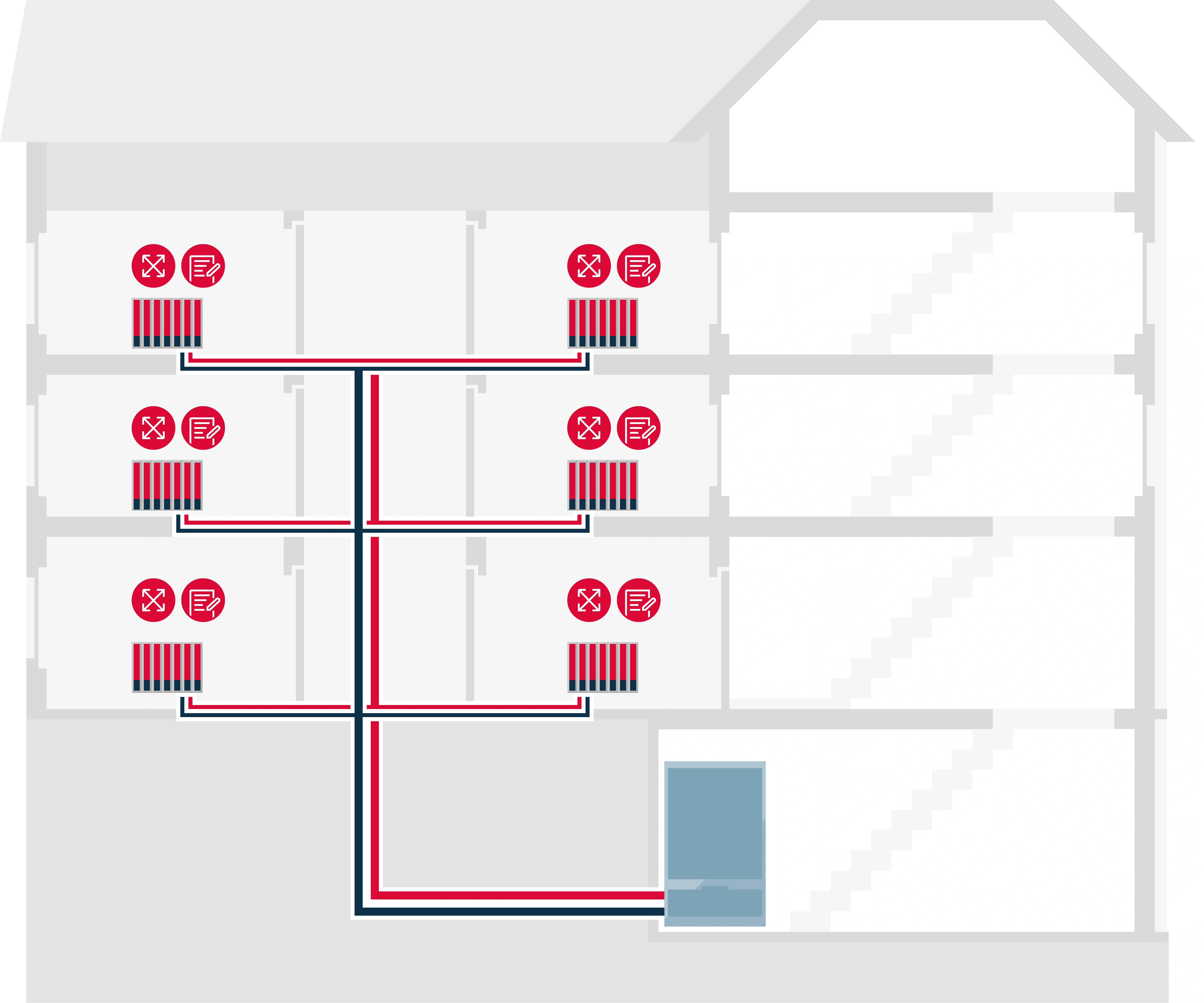
This method involves calculating the flow rates in each residential unit. Each heating unit is recorded and calculated individually. The flow rates are adjusted on this basis to ensure the even distribution of the heating water. If you place a separate order, we can also install new thermostatic valves for you.
Our services
- Preparation of calculations for optimal flow rate
- Preparation of instructions for setting the adjusted flow rate
- Optionally, we can install new thermostatic valves
Advantage
- No running costs
Disadvantage
- More complex, as each apartment is recorded individually
- No monitoring of different consumption levels in real time
- No adaptation to user behavior beyond the DIN standard possible
- High investment costs
Solutions #02
Automated hydraulic balancing - EN.Valve
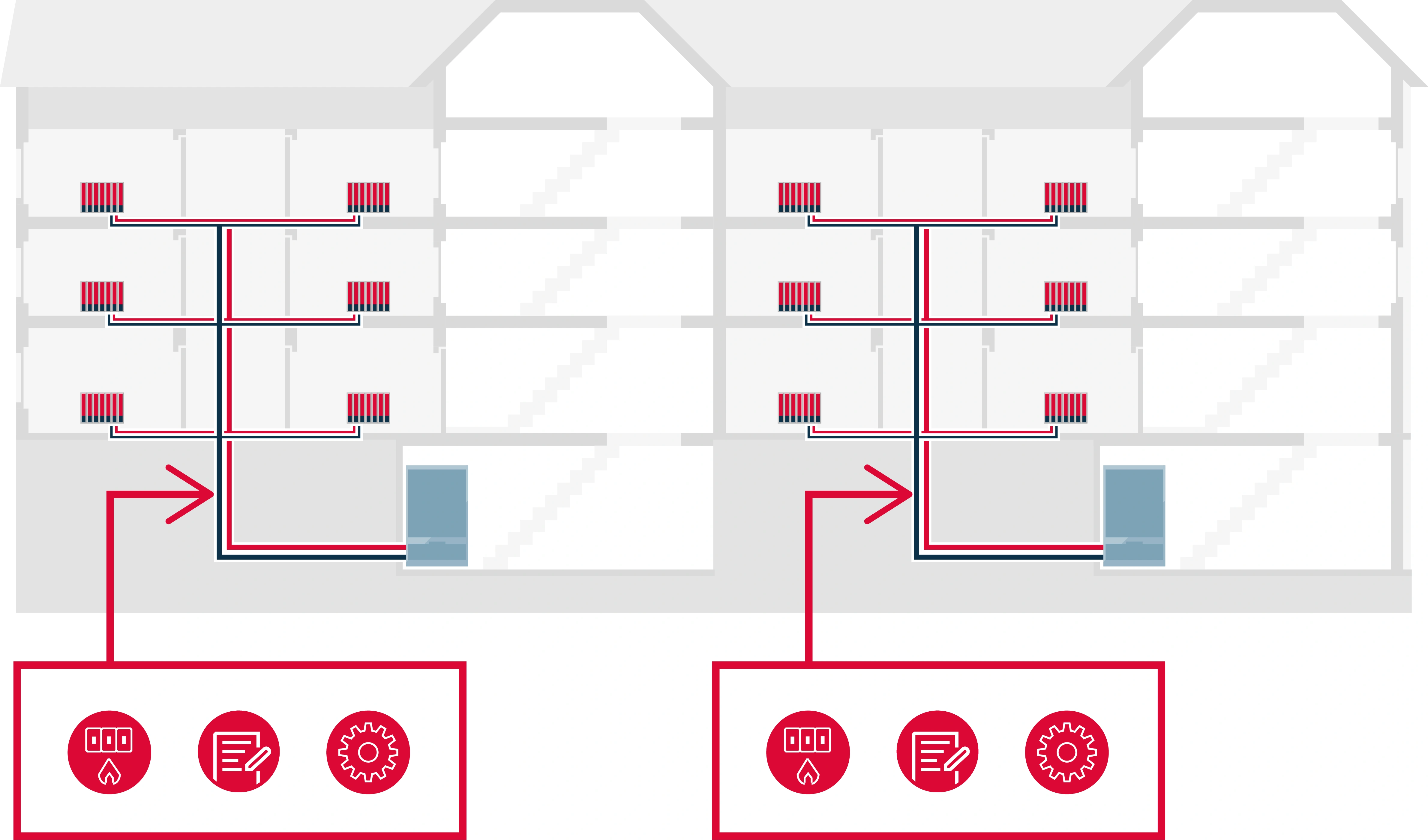
By installing valves in the individual vertical heating pipes, the heat is evenly distributed between the respective stairways.
At the same time, we create the basis for building automation, as all consumption is recorded in real time and further savings potential can be calculated.
The advantage: We do not have to record the residential units or each heating device individually.
We offer our customers a contracting model for automated hydraulic balancing.
Automated hydraulic balancing as a contracting model
The "all-round carefree package"
From the installation of the hardware to ongoing fine-tuning – we adapt your heating system for you using automated hydraulic balancing.
Our services
- Installation of the hardware > valves including sensors and actuators
- Provision of a router including internet costs
- Operation of the EN.Valve hardware using a portal and its own EN.Valve logic
- Provision of the server infrastructure
- Alignment of EN.Valve to the individual conditions of the building including fine-tuning
- Transmission of consumption data (e.g. as a basis for ESG reports)
Advantages
- No recording of individual residential units / radiators necessary
- Recording of various consumptions in real time
- Basis for calculating further savings potential
- Basis for calculating regenerative heat supply
- No investment costs
Disadvantage
- Running costs